

For most healthy adults, taking a daily multivitamin does not provide a significant reduction in the risk of heart disease, cancer, or early death. Extensive clinical research suggests that if you are already eating a balanced diet, these supplements offer no meaningful health benefit for disease prevention.
What the Research Says About Your Daily Supplement
Many people take a multivitamin with the primary goal of preventing chronic illness, but the gold standard of medical evidence—randomized controlled trials—paints a different picture. The COSMOS trial (Cocoa Supplement and Multivitamin Outcome Study), which followed over 21,000 participants, found no significant benefit for cardiovascular disease or total cancer incidence. In fact, the mortality rate for those taking a supplement was 3.4%, nearly identical to the 3.6% in the placebo group.
Furthermore, a 2022 review by the United States Preventive Services Task Force (USPSTF), which analyzed nine different trials involving 51,000 patients, concluded there is insufficient evidence to recommend multivitamin supplementation for the prevention of cardiovascular disease or cancer. More concerningly, a large 2025 analysis published in JAMA Network Open involving 390,000 patients found that supplement use was actually associated with a 4% higher mortality risk during early follow-up periods.
The Myth of “Multivitamin Deficiency”
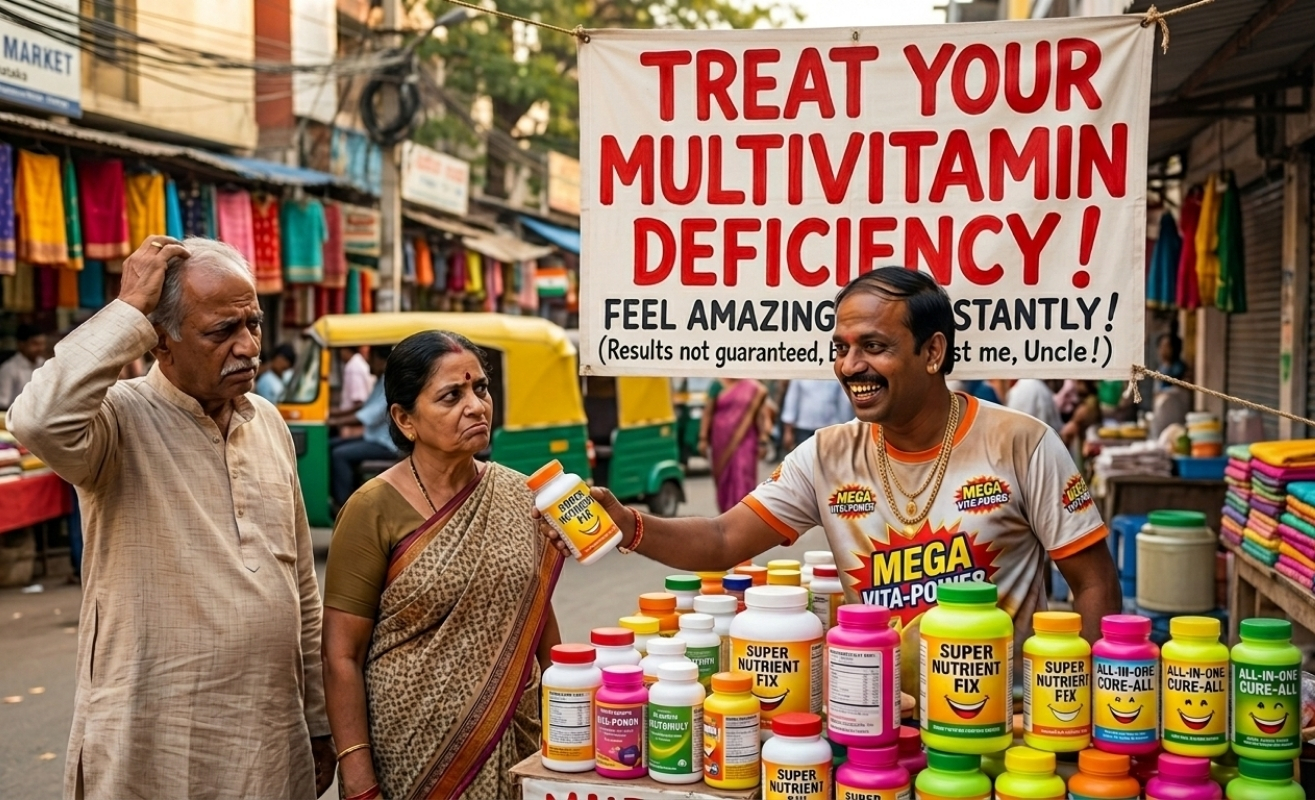
It is important to clarify a common misconception often seen in television advertisements: there is no such clinical condition as “multivitamin deficiency.” While individuals can be deficient in specific nutrients—such as Vitamin D or Iron—the idea that the body lacks a “multivitamin” is a marketing gimmick rather than a medical reality.
Who Actually Benefits from Supplementation?
While routine use is unnecessary for the general population, targeted vitamin and mineral supplementation is critical for specific groups with restricted diets or metabolic needs:
Medical Weight Loss Patients
In my practice, I often see patients on weight loss programs using GLP-1 receptor agonists (semaglutide, tirzepatide). Vitamin and mineral deficiencies can be present in up to 20% of these individuals during the first year of treatment due to reduced caloric intake. After assessing their diet diaries, I will consider a multi-vitamin after consultation with a registered dietitian.
Surgical Weight Loss
Patients who have undergone bariatric or surgical weight loss procedures require lifelong supplementation due to altered nutrient absorption.
Restrictive Diets
Those on a vegan diet often require Vitamin B12, iron, and calcium, as these are harder to obtain from plant-based sources alone.
Digestive Conditions
Individuals with Celiac disease, non-celiac gluten sensitivity, and inflammatory bowel disease (Crohn’s disease or ulcerative colitis) often have malabsorption issues or dietary restrictions that necessitate supplementation.
Pregnancy
Pregnant women should take prescribed prenatal vitamins to support fetal development, beginning before conception is planned.
Clinical Anemia
Nutritional anemias are very common in India, particularly amongst women of childbearing age and in rural areas. Certain types of anemias require specific therapeutic doses of iron or vitamins that a standard over-the-counter multivitamin pill cannot provide.
Elderly Adults
Some elders, especially those living in nursing homes/senior care homes, or who have a restricted diet and spend little time outdoors may benefit from taking a mixture of vitamin D and calcium supplements to prevent osteoporosis. This should be done under the guidance of a physician or registered dietician.
Diabetes and Metformin
Long term use of metformin, a commonly used medicine used for treating diabetes, is associated with vitamin B12 deficiency in 8–30% of people, with a higher incidence seen at higher doses and prolonged use (> 4 years). If you are on metformin, get a blood test for vitamin B12 done annually, and see your doctor if you have symptoms of B12 deficiency: new or worsening symptoms of extreme tiredness, a sore and red tongue, pins and needles, or pale or yellow skin.
Vitamin D Deficiency
In India, Vitamin D deficiency is a common clinical finding, with research indicating that 70% to 90% of the population may have insufficient levels. This ‘sunshine vitamin’ plays a pivotal role far beyond bone health and calcium metabolism; it is increasingly recognised for its importance in preventing chronic fatigue, supporting brain health to reduce the risk of dementia, protecting overall heart health, and reducing the risk of certain autoimmune diseases. It is important to remember that those identified with a deficiency will require supplementation at specific therapeutic doses with regular medical monitoring. Self-medicating with high doses is discouraged, as excess levels of Vitamin D can be harmful and lead to toxicity.

Who Should NOT Take Multivitamins?
For individuals with chronic kidney disease (CKD) or reduced renal function, taking a daily multivitamin without medical supervision can be hazardous. Because the kidneys are responsible for filtering blood and removing excess substances, impaired function means the body cannot efficiently clear high doses of certain nutrients. For instance, high amounts of Vitamin C can convert to oxalate, leading to kidney stones, while excess Vitamin D and calcium can increase the risk of vascular calcification. Additionally, certain multivitamin formulations containing phosphorus can disrupt mineral balance in those with reduced kidney function.
If you have CKD, diabetes, or high blood pressure, you should not consume vitamin supplements without a specific prescription from your doctor.
Summary
A multivitamin is not a substitute for a healthy lifestyle. Current evidence shows no significant protection by multivitamins against major diseases or death for healthy individuals. Conversely, people with chronic kidney disease must exercise extreme caution, as unregulated supplement use can place unnecessary strain on the kidneys. Unless you fall into a specific high-risk category—such as those on GLP-1 medications or with specific medical conditions—your focus should remain on a nutrient-dense fibre-rich diet rather than a pill.
Reviewed for medical accuracy by Dr. Srikanth Sola. Last updated: April 8, 2026
References for detailed reading
- Sesso HD, et al. “Multivitamins in the Prevention of Cancer and Cardiovascular Disease: The COSMOS Randomized Clinical Trial.” American Journal of Clinical Nutrition, 2022.
- US Preventive Services Task Force. “Vitamin, Mineral, and Multivitamin Supplementation to Prevent Cardiovascular Disease and Cancer: US Preventive Services Task Force Recommendation Statement.” JAMA, 2022.
- Loftfield E, et al. “Multivitamin Use and Mortality Risk in 3 Large US Prospective Cohort Studies.” JAMA Network Open, 2025.